

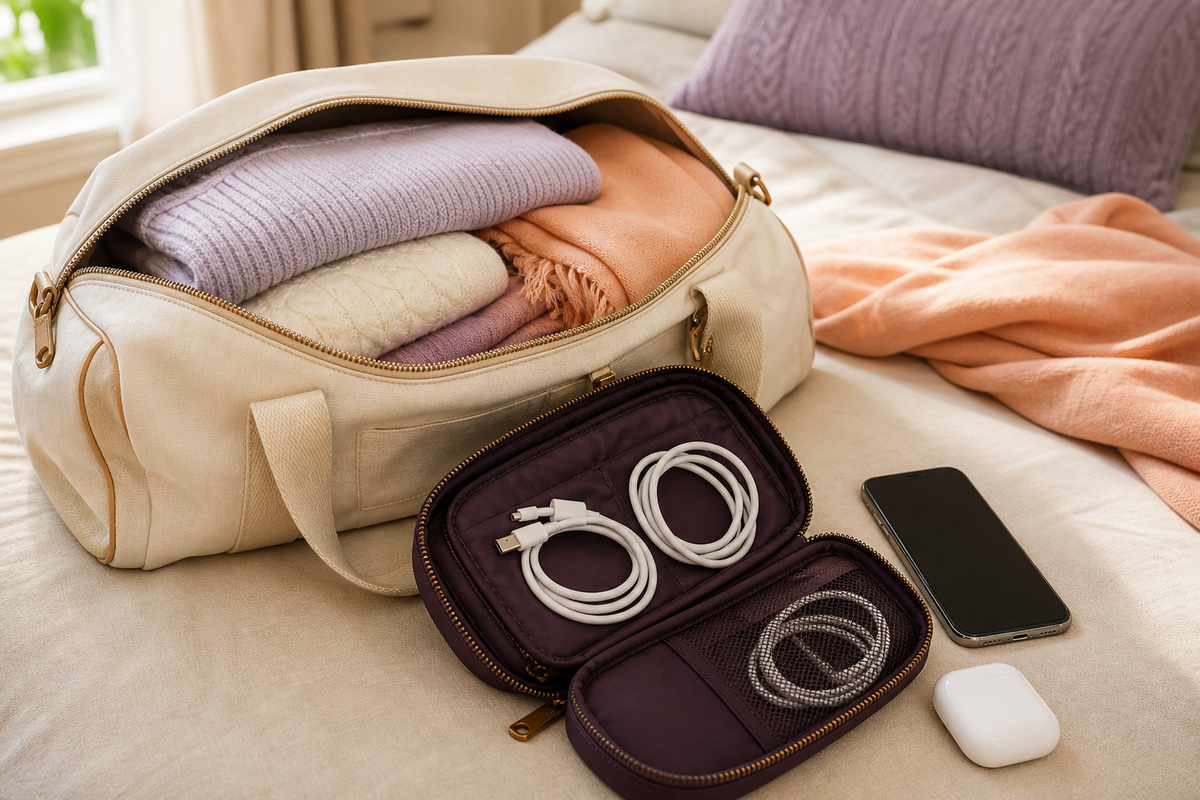
Your tickets are on your phone, your route is saved and the weekend bag is nearly packed. Choosing a travel adapter with USB-C is easier when you start with the trip and your devices, rather than the biggest number of ports in a product photo.
Quick answer: check the socket type at your destination, the electrical input requirements of your equipment and the USB charging requirements of each device. A travel plug adapter changes the plug connection; it does not automatically convert mains voltage. Choose the exact version that matches your trip.
This guide is for planning a charging kit before you travel. Follow the equipment manufacturer’s instructions and destination-specific electrical advice. If the ratings or compatibility are unclear, resolve them before using the equipment.
1. Start with the destination, not “universal”
Write down every country on the trip, including overnight stops. Then check the socket type, supply voltage and frequency for those destinations. “Europe” or “worldwide” on a product title is not a substitute for checking the actual plug format you will need.
Electrical Safety First’s travel advice includes destination guidance. It also notes that cruise ship sockets and voltage can vary, so check directly with the operator if your trip includes a cruise.
Keep the destination information beside the product listing while comparing versions. If a listing offers several plug options, the version you select matters more than the collection of plug pictures in the gallery. A useful buying note is: destination, required plug format, chosen product version.
2. Understand a travel adapter vs a voltage converter
A plug adapter helps connect a plug to a different socket format. Voltage conversion is a separate job. Electrical Safety First explains that travel adaptors do not convert voltage or frequency. See its travel adaptor safety guidance.
Read the input label on the appliance or its power supply. For example, an input range of 100–240V means that unit accepts voltages within that range, subject to its other stated requirements. It does not tell you what every device in your bag can accept. Check each item separately.
If the destination supply is outside the stated range, do not assume a plug adapter solves the problem. Ask the equipment manufacturer which solution is suitable. Electrical Safety First’s guidance on using UK appliances abroad explains why the appliance or power supply rating matters.
3. Match the USB ports to your device list
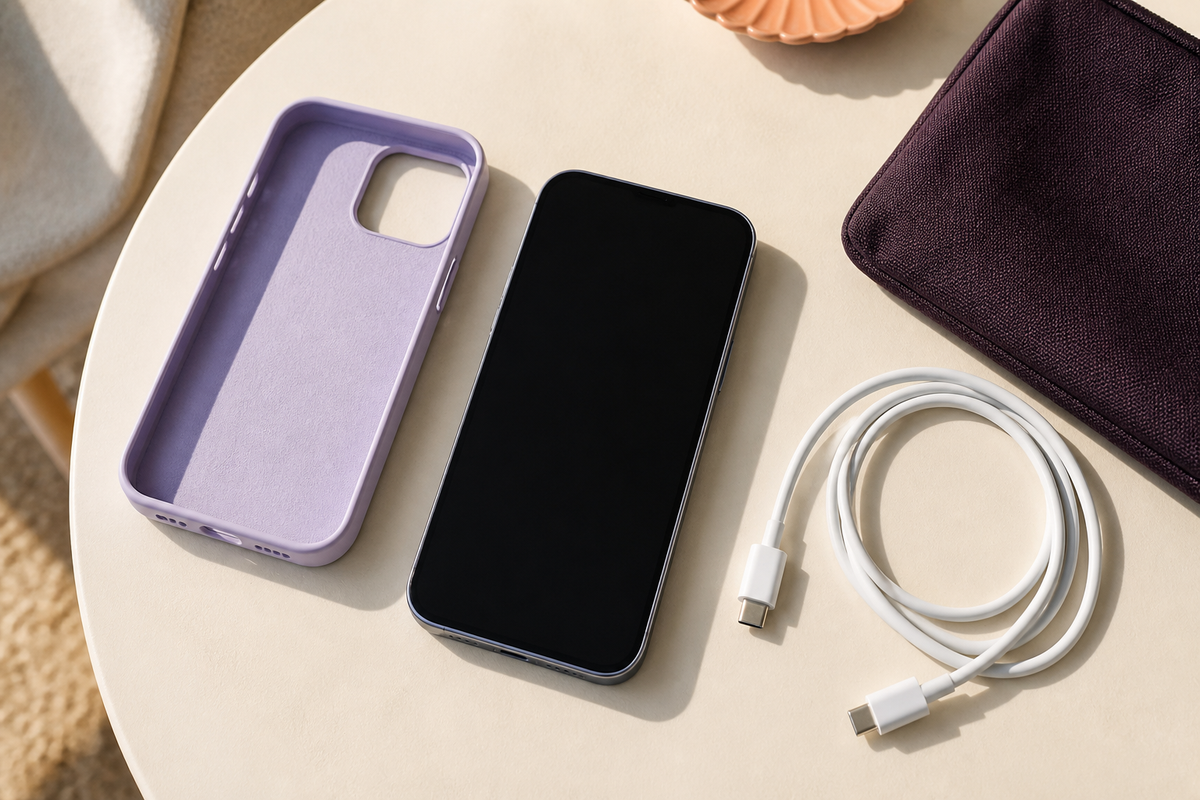
Lay out what you actually plan to take: phone, watch charger, earbud case and any other essential device. Look at both ends of each cable. Your phone may use a USB-C connector while an older cable connects to a USB-A charging port at the other end.
USB-C describes a connector, not a promise of a particular charging speed or USB Power Delivery support. The USB-IF’s USB-C guidance distinguishes the connector from supported power capabilities.
- Count how many devices you want to connect at the same time.
- Check the exact mix of USB-C and USB-A ports on the selected version.
- Check each port’s stated output and any shared-output limits.
- Match the supported charging protocol and cable requirements to your devices.
- For a laptop, check its specific charging requirements rather than assuming a USB-C port is enough.
For a short trip, charging devices at different times may suit you. If you expect to charge your phone while getting ready and your watch overnight, plan around that sequence. Extra ports are only useful when they solve a need in your own packing list.
4. Keep socket use and USB charging as separate checks
Some travel adapters offer a mains socket as well as USB ports. Do not treat the USB output rating as the socket’s appliance rating, or the socket rating as the power available from every USB port. Read the labels and instructions for the function you intend to use.
Electrical Safety First advises checking the adapter’s maximum rating and whether it is suitable for equipment requiring an earth connection. That is particularly important if you are packing more than personal charging devices. Its adapter safety guide explains these checks. If you cannot confirm suitability, do not connect the appliance.
5. Build a charging pouch before departure
A dedicated pouch makes it easier to see what is missing while you still have time to deal with it. Put the kit together before packing day, using the devices and cables you will actually take.
- Your destination-compatible travel adapter.
- The correct cables for your phone and earbud case.
- Your compatible watch charging cable or charging setup.
- Any separate power supply your equipment requires.
- A note of the selected adapter model and its instructions.
Group the kit by use rather than packing every spare cable you own. Keep the pouch accessible when you arrive, so you do not need to unpack the whole bag to find the charging essentials.
Check equipment for damage before use. Do not force an adapter into a socket that does not fit, and do not use damaged sockets or ignore burning smells. See Electrical Safety First’s accommodation checks.
Comparing ONDYRA’s travel adapter options
The Travel Plug Adapter with USB-C & USB-A Charging is available in different versions. Use the selected version’s plug details and specifications to check it against your destination and device list. Do not assume that every option has the same port count, output or socket arrangement.
It should not be treated as a voltage converter. If you need a detail that is not clear in the listing, contact ONDYRA before ordering. The aim is to arrive with a charging plan you understand, not another item to work out at the hotel.
Common travel charging questions
Do I need a travel adapter for Europe?
Check your destination country and the plug you are taking. The broad region name does not establish that a particular adapter will fit your accommodation’s sockets.
Can a travel adapter charge my phone without a wall socket?
A plug adapter is not a power bank. It needs an appropriate electrical supply. If you need charging while travelling between places, that is a separate product requirement.
Should I take my bedside charging station?
Only if its size, power requirements and device support suit the trip. Check the whole kit you would need to pack. Our 3-in-1 charger buying guide explains how to assess a multi-device setup without assuming it folds flat.
Put charging on the packing list. Check the travel adapter options, confirm the details for your trip and get ready for your kind of day.

Leave a comment
This site is protected by hCaptcha and the hCaptcha Privacy Policy and Terms of Service apply.